The Invisible Infrastructure of Operational Resilience
\n\n
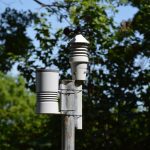
Most organizations treat their physical environment as a static backdrop—a collection of climate-controlled rooms and external perimeters that simply exist. This is a strategic oversight. In high-stakes industries, the difference between consistent output and catastrophic downtime often hinges on the granular data provided by environmental monitoring stations. These systems are not merely compliance tools; they are the sensory nervous system for your physical capital.
\n\n
When you abdicate the responsibility of real-time environmental awareness, you leave your operational strategy at the mercy of entropy. High-performance leaders recognize that predictability is a prerequisite for scale. If you cannot measure the volatility of your operating environment, you cannot mitigate the risks that threaten your execution.
\n\n
Beyond Compliance: Environmental Data as a Strategic Asset
\n\n
The traditional view of environmental monitoring is defensive. It is the box you check to satisfy auditors or satisfy safety regulations. This is a tactical failure. Modern leaders frame these stations as intelligence nodes. By integrating the data streams from data-driven decision-making protocols, an organization can shift from reactive maintenance to predictive excellence.
\n\n
Consider the cost of a climate-related failure in a server room or a sensitive manufacturing facility. It is rarely just the cost of the repair. It is the opportunity cost of lost time, the degradation of assets, and the ripple effect on your supply chain. An environmental monitoring station provides the operational excellence required to catch anomalies—like a cooling system drifting out of tolerance—before they trigger a full-scale shutdown. This is the essence of high-performance thinking: anticipating the failure so you never have to manage the crisis.
\n\n
The Architecture of Precision
\n\n
Deploying monitoring hardware is only half the battle. The true value lies in the integration of that data into your broader strategic planning. If your data is siloed, it is worthless. To extract real value, you must establish clear feedback loops between your sensor network and your management dashboard.
\n\n
Defining Key Metrics for Execution
\n
Not all environmental data carries the same weight. Leaders must define the critical thresholds that dictate intervention. This requires a rigorous decision-making framework that categorizes alerts based on impact:
\n
\n
Threshold Violations: Immediate, automated action required to prevent equipment damage.
\n
Trend Analysis: Subtle shifts in temperature or humidity that signal impending mechanical fatigue.
\n
Baseline Optimization: Long-term data collection used to refine energy efficiency and reduce overhead without compromising performance.
\n
\n\n
By forcing your team to define these metrics, you eliminate the noise. You stop reacting to every minor fluctuation and start focusing on the variables that actually move the needle on your bottom line.
\n\n
Scaling Through Automation
\n\n
Human oversight is the most expensive and least scalable form of monitoring. Relying on personnel to manually check conditions is a vulnerability. True execution requires the removal of human error from routine tasks. By automating the monitoring process, you free your high-value talent to focus on complex problem-solving rather than surveillance. When your stations are integrated with automated alerts and AI-driven diagnostic tools, your infrastructure becomes self-regulating.
\n\n
This is the ultimate goal of modern leadership: building systems that work harder than you do. When your physical environment is monitored by a robust, autonomous network, you gain the peace of mind to focus on high-level strategy, knowing that the foundation of your operation is stable.